
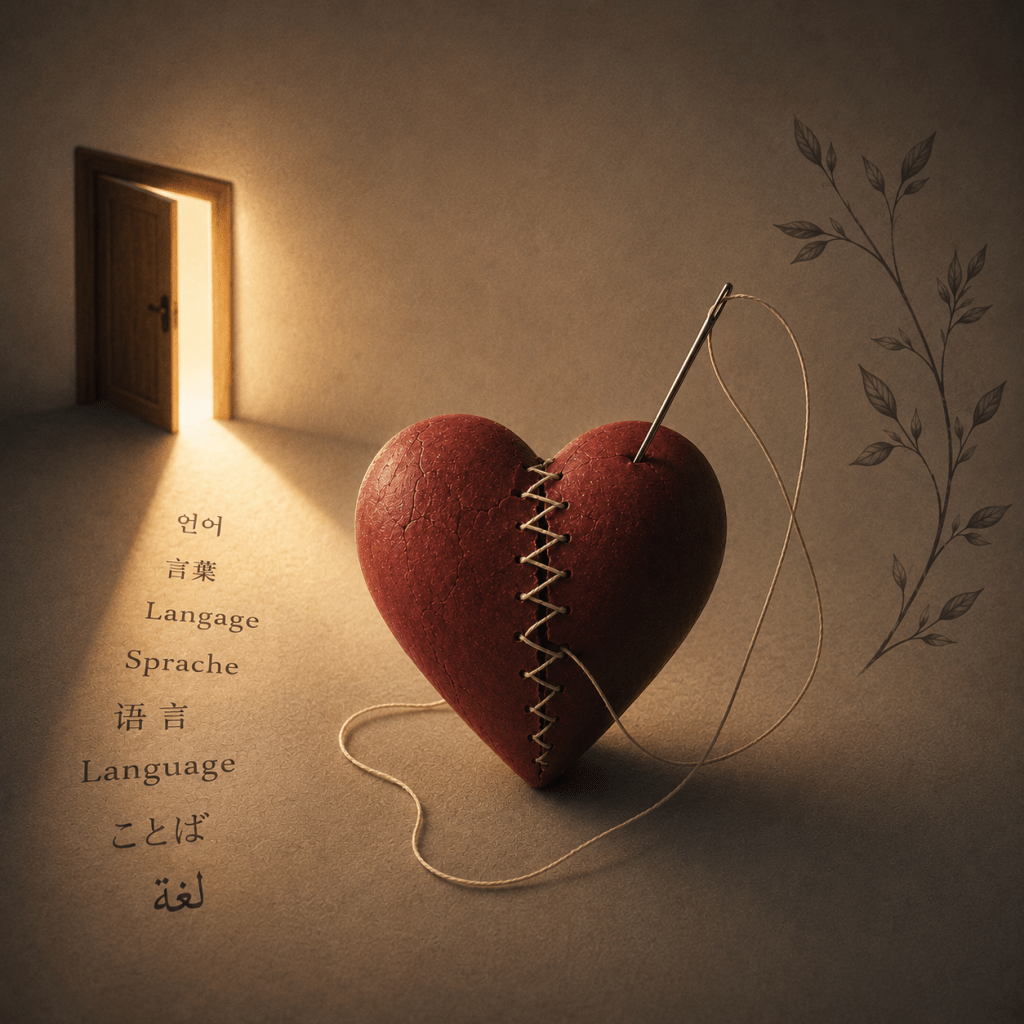
외국인으로 새로운 나라에서 살아간다는 것은, 새로운 단어 하나를 배울 때마다 이전에는 닫혀 있던 세상의 한 부분으로 들어가는 문 하나를 여는 것과 같습니다. 그리고 그렇게 문이 하나씩 열릴 때마다, 전혀 새로운 세계가 조금씩 모습을 드러냅니다.
언어는 우리에게 독립성을 줍니다. 다른 사람의 목소리를 빌리지 않고도, 직접 말하고, 있는 그대로의 나 자신을 표현할 수 있게 해 줍니다. 우리가 자유롭게 자신의 생각을 말할 수 있는 순간, 우리는 비로소 진정으로 존재하기 시작합니다. 어떤 의미에서는, 새로운 삶을 다시 시작하는 것과도 같습니다.
외국어를 배운다는 것은 단순히 단어를 외우거나 문법을 익히는 일이 아닙니다. 그것은 한 사람으로서 존재할 수 있게 되는 과정입니다. 창밖에서 세상을 바라보는 방문객이 아니라, 그 안으로 직접 걸어 들어갈 수 있는 사람이 되어 새로운 나라에서 다시 태어나는 일입니다.
우리가 살아가는 곳의 언어를 모른다면, 우리는 마치 그림자와도 같습니다. 분명 그곳에 존재하지만 완전히 보이지는 않고, 삶 한가운데 있으면서도 그것을 온전히 품을 수는 없습니다. 보이지 않는 벽 너머에서 세상을 바라보는 유령처럼 살아가게 됩니다.
언어는 그 벽을 허물어 줍니다. 낯선 이를 그 사회의 구성원으로, 관찰자를 그곳의 삶을 살아가는 사람으로 바꾸어 줍니다. 세상을 이해하는 것을 넘어, 그 세상의 일부가 될 수 있게 해 줍니다. 그리고 그때 비로소 우리는 자신의 두 손으로 세상을 향해 손을 뻗고 붙잡을 수 있습니다.
오늘 저는 병원에 다녀왔습니다.
병원 문을 들어서는 순간, 문득 1년 전 이곳에 왔던 날이 떠올랐습니다. 그때의 저는 거의 말을 할 수 없었습니다.
자신의 생각을 말로 표현하지 못할 때 느끼는 무력감은 참 특별합니다. 말이 없으면 우리는 더 이상 자신의 삶의 주체가 될 수 없습니다. 우리의 감정과 두려움, 우리의 선택이 다른 사람의 번역을 거치는 동안 제대로 전달되기만을 바랄 뿐입니다. 머릿속에는 하고 싶은 말이 가득한데, 입 밖으로는 아무것도 꺼낼 수 없었던 그 답답함을 저는 아직도 기억합니다.
하지만 오늘은 달랐습니다.
오늘은 제가 말하는 사람이었습니다. 더 이상 누군가 대신 말해 주어야 하는 존재가 아니라, 제 이야기의 주체였습니다. 질문을 할 수 있었고, 대답을 이해할 수 있었으며, 스스로 선택할 수 있었습니다. “네”라고 말할 수도 있었고, “아니요”라고 말할 수도 있었습니다. 어디가 아픈지, 왜 아픈지 직접 설명할 수도 있었습니다.
의사가 “피가 너무 많이 나네요. 이 방법은 안 되겠어요. 다시 해야 합니다. “라고 말하는 것도 이해할 수 있었습니다.
접수 직원의 말도, 간호사의 설명도, 의사의 설명도 이해할 수 있었습니다. 그리고 새로운 단어들도 배웠습니다. 봉합, 국소마취, 거즈. 어쩌면 아주 작은 단어들일지 모릅니다. 하지만 제게는 그 단어 하나하나가 또 하나의 열쇠였고, 또 하나의 문이 열리는 순간이었습니다.
오늘은 혼자 병원을 찾아갔습니다. 혼자 접수를 했고, 의사와 직접 이야기했습니다. 제 몸에 어떤 치료를 받을지도 제가 스스로 결정했습니다.
오랫동안 이 나라에서 살아온 사람들에게는 너무도 당연한 일일 것입니다. 하지만 새로운 언어 속에서 살아가는 법을 배우는 사람에게는, 이런 순간들이 조용하지만 분명한 승리입니다.
1년 전 저는 작아진 기분으로 병원을 나왔습니다.
하지만 오늘은 더 강해진 기분으로 병원을 나왔습니다.
더 이상 이 세상의 가장자리에 서 있는 방문객처럼 느껴지지 않았기 때문입니다. 저는 이곳에 속해 있다는 느낌을 받았습니다. 제 목소리로 말하고, 스스로 선택하고, 그리고 제 말이 있는 그대로 전달되는 사람이 되었다는 것을 느꼈습니다.
언어는 단지 우리를 소통하게 만드는 것이 아닙니다.
언어는 우리를 존재하게 합니다.
약국에 도착했을 때, 약사분이 저를 보며 말했습니다.
“전화 왔어요.”
수술해 주셨던 의사 선생님이었습니다.
한국어로 받은 첫 번째 전화였습니다.
의사 선생님은 치료에 대해 몇 가지를 더 물으셨고, 저는 대답했습니다. 아주 짧고, 실용적이고, 어쩌면 아무렇지도 않은 대화였습니다. 하지만 저에게는 그 어떤 대화보다 특별했습니다.
이야기를 나누는 동안 주변 사람들의 표정이 눈에 들어왔습니다. 잠시 놀란 기색이 스쳐 지나갔습니다.
그 나라의 언어를 하지 못하는 외국인은 종종 투명인간이 됩니다. 사람들은 그들을 대신해 말하고, 그들에 대해 이야기하고, 그들이 이해하지 못할 것이라고 자연스럽게 생각합니다.
하지만 그 언어를 하는 외국인은 그 익숙한 기대를 깨뜨립니다. 아주 잠깐이지만, 마치 보이지 않는 경계를 넘어선 사람처럼 보입니다. 원래는 들어오지 못할 것이라 여겨졌던 공간 안으로 조용히 걸어 들어온 사람처럼 말입니다.
저는 저도 모르게 미소를 지었습니다.
의사 선생님은 제 상처를 꿰매 주셨을 뿐만 아니라, 제 안의 또 다른 무언가도 치유해 주셨습니다.
1년 전의 저는 다른 사람의 말을 통해서만 존재하는 사람처럼 느껴졌습니다.
하지만 오늘 저는 제 전화를 직접 받았고, 제 목소리로 말했으며, 모든 문장을 이해했습니다.
저는 아직도 배우는 중입니다. 여전히 실수도 합니다.
하지만 이제는 제 삶을 멀리서 바라보기만 하는 침묵의 관찰자처럼 느껴지지 않습니다.
저는 온전히 존재하는 한 사람이라고 느낍니다.
누군가에게는 너무도 평범한 일상이, 다른 누군가에게는 가장 특별한 치유의 순간이 되기도 합니다.
외국에서 살아가는 특별한 평범한 하루.
그래서 누군가 제게 **”Why do you study Korean?”**라고 물었을 때, 제가 **”Why not?”**라고 대답했던 것입니다.
When you live in a new country as a foreigner, every new word you learn is like opening a door to a part of the world that was once closed to you. And as one door opens after another, an entirely new world slowly reveals itself.
Language gives us independence. It allows us to speak directly, to share who we are without needing someone else’s voice to carry our own. The moment we can express ourselves freely, we truly begin to exist. In a sense, we are born again.
Learning a foreign language is far more than acquiring vocabulary or mastering grammar. It is becoming capable of existing. It is the chance to be reborn in a new country, not as a visitor looking through a window, but as someone who can finally step inside.
Without the language of the place we live, we remain like shadows—present, yet never fully seen; surrounded by life, yet unable to embrace it completely. We move through the world like ghosts, watching it unfold from just beyond an invisible wall.
Language tears down that wall. It transforms strangers into participants, observers into inhabitants. It allows us not only to understand the world around us, but to become part of it. Only then can we truly reach out and grasp the world with our own hands.
Today I went to the hospital. As I walked through its doors, I found myself remembering the last time I had been there, a year ago, when I could barely speak the language.
There is a peculiar kind of helplessness that comes with not being able to express your own thoughts. Without words, we cease to be fully the subject of our own lives. We become dependent on the voice of another, hoping that our feelings, our fears, our choices survive the journey through translation. I remember that quiet frustration—the feeling that my mind was full, yet my voice could not carry it.
Today was different.
Today, I was the one who spoke. I was no longer an object to be spoken for, but the subject of my own story. I could ask questions, understand the answers, and choose. I could say yes. I could say no. I could explain what hurt, and why.
I could understand what was going “there is too much blood, it doesn’t work. I need to do it again.”
Understanding the administrative staff, the nurse, the surgeon and learning new words: stitches, local anesthesia, gauze. Small words, perhaps. Yet each one felt like another key, another door unlocked.
Today, I found the hospital on my own. I registered by myself. I spoke with the doctor. I chose the treatment for my own body. None of these things are extraordinary to those who have always belonged. But for someone learning to inhabit a new language, they are quiet victories.
A year ago, I left the hospital feeling small. Today, I left feeling stronger.
Because I did not feel like a visitor standing at the edge of this world. I felt that I belonged within it—that I could reach out, speak, choose, and be heard.
Language does not simply allow us to communicate. It allows us exist.
When I arrived at the pharmacy, the pharmacist looked up and said, “There’s a phone call for you.”
It was the surgeon.
My first phone call in Korean.
He asked me a few more questions about my treatment, and I answered. It was an ordinary conversation—brief, practical, almost insignificant. Yet, to me, it felt extraordinary.
As I spoke, I noticed the faces around me. There was a flicker of surprise.
Foreigners who cannot speak the language often become invisible. People speak around them, over them, for them. They are expected not to understand.
But a foreigner who does speak the language unsettles that expectation. For a brief moment, it is almost as if they have crossed an invisible boundary—as if they have quietly stepped into a place where they were never expected to belong.
I couldn’t help but smile.
The surgeon had stitched my wound, but he had mended something else as well.
A year ago, I felt as though I existed only through other people’s words. Today, I answered my own phone call, spoke for myself, and understood every sentence.
I am still learning. I still make mistakes. But I no longer feel like a silent observer of my own life.
I feel like a fully existing subject.
Sometimes, the most ordinary moments in one person’s life become the most extraordinary acts of healing in another’s.
An extraordinary ordinary day living in a foreign country
So, that is what I meant when I answered, “Why not?” to the question, “Why do you learn Korean?”
 Chihiro
Leave a comment